Asphalt Driveways in Huntsville, AL
A new asphalt driveway that looks sharp, sheds water, and lasts — installed for Huntsville homes and Madison County properties of every size, from short in-town drives to long approaches on acreage.
Call (256) 813-9284 for a Free Estimate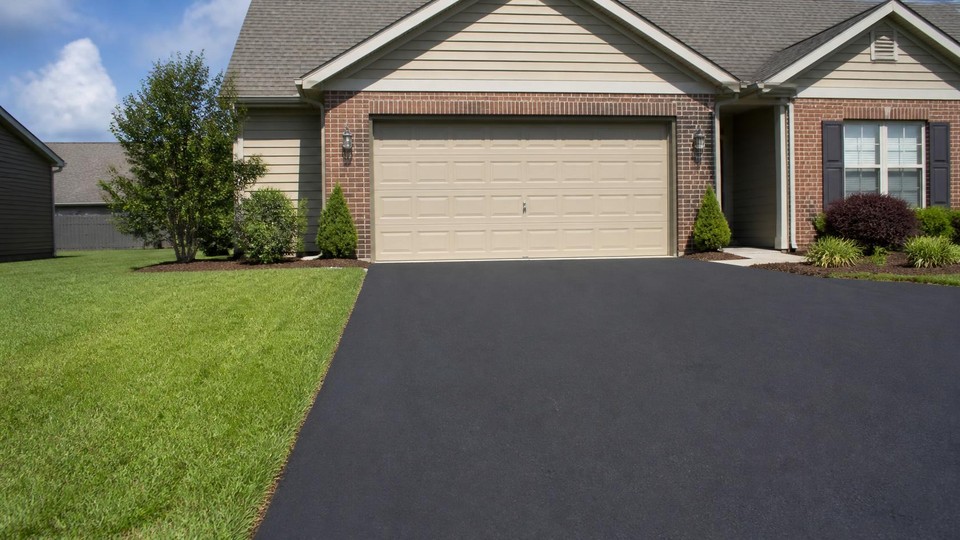
Your driveway is the first thing people see and the surface your family uses every day. We build driveways the right way from the ground up: grade for drainage, compact a solid stone base over the clay, then pave and roll to a clean, even finish that holds up to North Alabama heat and rain. On expansive clay the order matters — the finish is the easy part, and it only lasts if the base and the water are handled first.
Replacing a cracked, patched, or sunken driveway is often less expensive than homeowners expect, because a fresh surface ends the constant small repairs an old one keeps demanding. If your current drive is faded and spidered with cracks, a resurface or a replacement resets the clock — and we will tell you honestly which of the two you are actually looking at.
Drainage on Ground That Holds Water
Red clay drains slowly, and slow drainage plus heavy summer rain is the exact recipe for a driveway that fails from underneath. Water that sits on or beside the drive has all day to soak in, and saturated clay swells, softens, and moves — so a driveway that ponds after every storm is on a countdown no matter how good the asphalt looks on top. That is why drainage is the first thing we plan on a driveway here, not the last.
On a flat lot that means building a crown or a consistent cross-slope so water sheds to the sides, and often a regraded shoulder or a swale to carry it away from the drive entirely. Where the driveway meets a county road, it usually means a properly sized culvert at the entrance so the roadside ditch keeps flowing instead of backing up under your approach. Done right, the drive is shedding water minutes after the rain stops and the clay under it stays as stable as clay gets.
Long Drives on Acreage North of the City
North of Huntsville — around Meridianville, Harvest, and New Market — a lot of properties sit well back from the road behind long approaches, and a three-hundred-foot drive is not just a bigger version of a suburban one. It is a drainage and base project along its whole length. Water running the length of a drive gathers volume and finds the low spot, so the crown and the fall have to be right the entire way, not just near the house, or the low end saturates and starts to fail first.
The base has to be consistent too, because the whole run carries the same trucks, trailers, and daily traffic, and we size it to the real loads a working property puts on it. On the longest approaches, tar-and-chip is sometimes the smarter surface for the distance while asphalt handles the turnaround and the parking area near the house — we will lay out the mix that fits the property and the budget.
Caring for a New Driveway Here
A new asphalt driveway asks for very little, but the little it asks for matters. For the first few weeks the surface is still curing and is softest in the afternoon heat, so keep trailer jacks and kickstands on a board, avoid turning your wheels hard while parked, and try not to leave a vehicle baking in the same spot all day.
After that, the upkeep is simple and it is the difference between fifteen years and twenty-plus: fill any cracks that open so water stays out of the clay, and sealcoat every two to three years to hold off the sun and close the surface. That small, cheap routine is what keeps water from reaching the base — which, on clay, is where every expensive failure begins.
Asphalt, Concrete, or Pavers: How to Decide
Most people planning a new driveway around Huntsville are weighing these three against each other, and none of them wins every time. The right answer usually comes down to how long the driveway is, what the ground under it does with water, and how much upkeep you actually want to take on.
On upfront cost, asphalt is generally the least expensive of the three per square foot, and that gap grows with every additional foot of driveway. On a short suburban apron the difference may be small enough that appearance decides it. On a long approach on acreage, the difference can be the whole budget.
On lifespan, concrete typically outlasts asphalt when both are built correctly, and pavers can outlast either because individual units can be lifted and reset. But with all three, what fails first is almost never the surface — it is the ground underneath, and around here that means how the clay was based and drained. A beautifully finished driveway over an unhandled clay subgrade fails early no matter which of the three you chose.
What Red Clay Does to Each Surface
Expansive clay gives every driveway material the same underlying problem — a subgrade that moves — but each one shows it differently. Asphalt is flexible, so it tolerates the minor seasonal movement of a well-based clay subgrade better than a rigid material does, and when it does crack it is the easiest of the three to fill and patch. Its weaknesses here are the heat, which softens it, and the sun, which is why it needs periodic sealcoating to stay flexible instead of going brittle and gray.
Concrete does not soften in the heat and does not need sealcoating on the same rhythm, but it is rigid, so when clay swells and settles unevenly a slab cracks — which is why concrete is poured with control joints that decide in advance where that crack will go. On active clay those joints and the base preparation matter enormously.
Pavers handle movement best of the three because the surface is many small pieces rather than one continuous mat, so settling shows up as an uneven paver that can be lifted and reset rather than a crack. The trade-offs are the highest cost per square foot, joint sand that needs occasional attention, and weeds finding the seams over time.
When Asphalt Is Not the Right Answer
Concrete or pavers tend to make more sense on a short driveway or entry apron where appearance carries real weight, where a decorative finish is wanted, or where the owner would rather pay more at the start and think about it less afterward.
Asphalt tends to make more sense on the longer drives common on acreage around the county, where cost per square foot decides what is even possible, and for owners who would rather spend less up front and keep a simple maintenance rhythm of sealcoating and crack filling. If your driveway is short, highly visible, and the budget is not the constraint, concrete or pavers are a defensible choice — and any contractor who tells you asphalt is always the answer is selling, not advising.
When you are ready to talk numbers, here is what an asphalt driveway costs in Huntsville and what moves the price.
What’s Included
- New driveway installation, start to finish
- Tear-out and replacement of failed driveways
- Grading and drainage built for slow-draining clay
- Smooth, sealed finish with clean edges
- Sizing and thickness matched to residential use
Why It Matters in Huntsville
Around Huntsville — in older in-town neighborhoods and out on the acreage north of the city alike — the ground under the driveway is red clay that holds water and moves with the seasons. That is exactly why the base and the slope decide everything here: get them right and asphalt is a practical, long-lasting, low-maintenance driveway; get them wrong and the surface is only borrowing time.
Frequently Asked Questions
How much does a new asphalt driveway cost in Huntsville?
It depends on length, width, and site prep — a short in-town drive and a long approach on acreage are very different jobs, and on clay the amount of base and drainage work is the biggest variable. Call for a free, no-obligation estimate specific to your property, or see our driveway cost guide for what moves the number.
Can you resurface my old driveway instead of replacing it?
If the base is still sound and the cracking is only on the surface, resurfacing with an overlay can be a cost-effective option. If the clay under it has been moving and the base has failed, replacement is the better long-term value. We assess what the base is actually doing and tell you honestly.
How long will an asphalt driveway last here?
In North Alabama a well-built, well-drained asphalt driveway gives you fifteen to twenty years, stretching further on a sound base with the water kept moving and a seal renewed on schedule. On clay, more than anything, length of life comes down to keeping water off the top and out of the base.
Can you pave over my existing gravel driveway?
Often, yes — a well-established gravel drive can be graded, topped with additional base, and paved. A soft or rutted one needs the base fixed first, because paving over unstable clay just moves the problem under the new surface. We check what is under there and tell you what it actually needs.
Do I need a permit for a new driveway in Madison County?
A new connection to a county or state road generally needs an access permit and often a culvert at the entrance. Requirements vary by road, so confirm the current rules for your address; we build the entrance to meet them.
How wide should my driveway be?
A single-car drive is usually about ten feet, and a comfortable two-car or trailer-friendly drive is wider. On larger properties we also plan turnarounds and pull-offs so you are not backing down a long approach. We will lay out a width that fits how you actually use it.
How long does it take to install a driveway?
Most residential driveways are a one- to two-day job once we start, depending on how much base has to be built and the length of the run. Longer approaches on acreage take more. We give you a realistic timeline with the estimate.
Is asphalt cheaper than concrete for a driveway?
Generally yes, per square foot, at installation, and the longer the driveway the wider that gap gets. Over a full lifespan the difference narrows, because asphalt asks for periodic sealcoating while concrete asks for less routine upkeep — but on active clay, asphalt's flexibility is a real point in its favor.
Which lasts longer here, asphalt or concrete?
Concrete usually lasts longer if both are built correctly and it does not soften in heat. But on expansive clay the base and drainage decide the outcome far more than the surface material does, and asphalt flexes with minor movement where a rigid slab cracks. We will weigh it for your specific lot.
What about pavers?
Pavers handle a moving clay subgrade well because individual units can be lifted and reset, and they look the best of the three to most people. They also cost the most per square foot and need joint sand refreshed and weeds kept out of the seams.
How soon can I drive on each one?
New asphalt typically takes vehicle traffic in a day or two, though it stays soft for several weeks. Concrete generally needs about a week of cure before you park on it. Pavers can be driven on as soon as the installation is finished.
Other Services
- Asphalt Paving in Huntsville
- Sealcoating in Huntsville
- Asphalt Repair in Huntsville
- Parking Lot Paving in Huntsville
- Tar & Chip Driveways in Huntsville
Areas We Serve
- Asphalt Driveways in Madison County
- Asphalt Driveways in Madison
- Asphalt Driveways in Meridianville
- Asphalt Driveways in Harvest
- Asphalt Driveways in New Market
Wondering what it runs? See our asphalt driveway cost guide for Huntsville.
Free Asphalt Driveways Estimate in Huntsville
Free, no-obligation estimates across Madison County. Tell us about your driveway or lot.
Call (256) 813-9284